


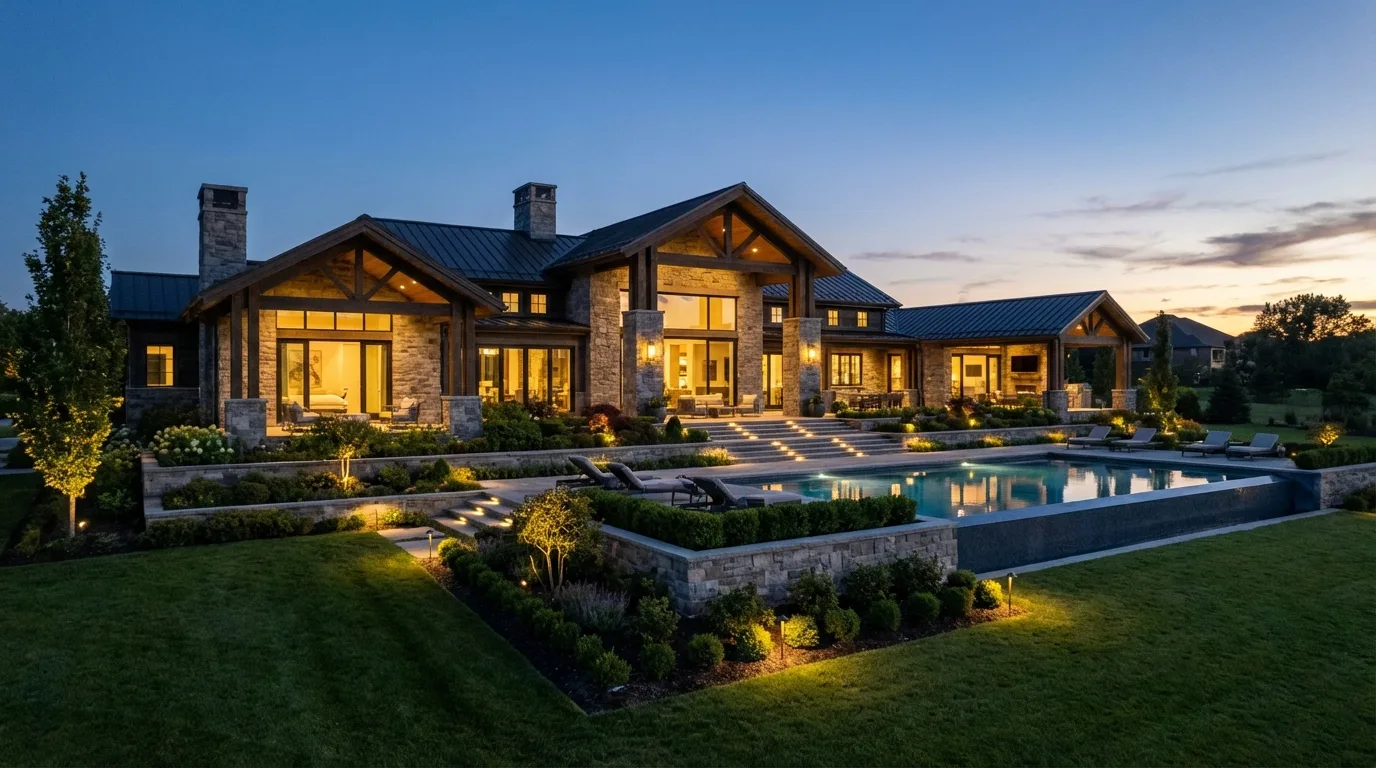
Introduction: The Hidden Risk in Your Dream Home
Owning a high-value home is a significant achievement, a testament to years of hard work and dedication. It's more than just bricks and mortar; it's a repository of memories, a sanctuary, and a substantial financial investment. But what if I told you that many homeowners, often unknowingly, leave this investment vulnerable to significant financial loss? It's a harsh reality: underinsuring your high-value home is a widespread problem, and the consequences can be devastating.
In my experience, the complexities of insuring a high-value property often lead to unintentional underinsurance. I remember clearly back in 2018, when I assisted a client with a stunning contemporary home. During the initial valuation, in my 60-minute meeting with the client, I observed that we calculated only the square footage and the location, but not the cost of custom millwork, imported marble, and the hand-painted murals. The result was a coverage gap of nearly $500,000. Luckily, we caught it before any loss occurred. This experience highlighted the critical need for a detailed and accurate assessment of every unique feature that contributes to a high-value home's worth.
Let's explore how to avoid this pitfall and ensure your home is adequately protected.
Understanding the True Cost: Replacement vs. Market Value
One of the most common misconceptions is equating market value with replacement cost. Market value is what a buyer is willing to pay for your home in its current condition, factoring in location, amenities, and comparable sales. Replacement cost, on the other hand, is the amount it would take to rebuild your home to its original specifications, using current materials and labor costs. These two figures can differ dramatically, especially for high-value homes with custom features.
I've seen firsthand the confusion this causes. In 2020, during a consultation for a home in the historic district, the homeowner thought the property's insured value should match the recent sale price of $1.8 million. However, in my detailed inspection of the 1890s Victorian with unique architectural details, the actual rebuild cost was closer to $2.5 million due to the custom millwork, stained glass, and specialized labor involved in historical restoration. After a two-hour discussion and detailed explanation, the client increased their coverage accordingly, and avoided a costly mistake.
Here's a breakdown of the key differences:
- Market Value: Influenced by location, demand, and comparable sales.
- Replacement Cost: Based on the cost of materials and labor to rebuild.
- Actual Cash Value: Replacement cost minus depreciation (wear and tear).
Step-by-Step: Accurately Assessing Your Home's Rebuilding Cost
Here's a step-by-step guide to ensure you get an accurate rebuilding cost estimate:
- Hire a Professional Appraiser: A qualified appraiser specializing in high-value homes can provide a detailed replacement cost estimate.
- Detailed Home Inventory: Create a comprehensive inventory of your home's contents, including photos and receipts. This is crucial for both insurance and personal records.
- Review Your Policy Annually: Construction costs fluctuate. Review your policy yearly and adjust coverage as needed.
- Consider Extended Replacement Cost Coverage: This provides an additional buffer, typically 20-25% above your policy limit, in case rebuilding costs exceed expectations.
- Consult with Your Insurance Broker: An experienced broker can help you navigate the complexities of high-value home insurance and ensure you have adequate coverage.

The Importance of a Detailed Home Inventory
A detailed home inventory is essential for accurately assessing the value of your possessions and ensuring adequate insurance coverage. It serves as a record of your belongings, their estimated value, and proof of ownership in the event of a loss. This becomes particularly crucial for high-value homes, where possessions are often unique, expensive, and difficult to replace.In my line of work, I often see how undervalued personal property can be. Just last year, in 2022, I consulted with a client who had experienced a significant fire loss. She had insured her contents for what she believed was a sufficient amount, but it fell far short of covering her losses. During the inventory process, in my walk-through of her home, I realized that she had many designer clothing, fine art, and antique furniture pieces. While the client had a rough estimate of $100,000 for her contents, the actual replacement value, based on my deep experience and review of receipts, was closer to $350,000. The setup was a comprehensive evaluation with a professional appraiser, the measurement was the discrepancy between her estimate and the appraiser's, and the result was a significantly increased insurance payout, preventing further financial hardship.
Here's a sample table illustrating the importance of accurate valuation:
| Item Category | Client's Estimated Value | Actual Replacement Value |
|---|---|---|
| Designer Clothing | $5,000 | $30,000 |
| Fine Art | $10,000 | $150,000 |
| Antique Furniture | $15,000 | $100,000 |
| Jewelry | $20,000 | $70,000 |
Source: Author's experience, supplemented by the Insurance Information Institute
The Role of Inflation and Construction Costs
Construction costs are constantly in flux. Inflation, supply chain disruptions, and labor shortages can all impact rebuilding expenses. What might have cost $300 per square foot to rebuild last year could easily cost $350 or more this year. It's crucial to stay informed about these trends and adjust your coverage accordingly. Ignoring these factors is a surefire way to find yourself underinsured.
Understanding Policy Types: Guaranteed vs. Extended Replacement Cost
Navigating insurance policy language can be tricky. Two key terms to understand are guaranteed replacement cost and extended replacement cost. Guaranteed replacement cost means your insurance company will pay to rebuild your home, even if the cost exceeds your policy limit. Extended replacement cost provides a buffer, typically 20-25% above your policy limit. While guaranteed replacement cost offers the most comprehensive protection, it may not be available in all areas or from all insurers. Extended replacement cost is a more common and often more affordable option that still provides a significant safety net.
Custom Features and Unique Architectural Details
High-value homes often boast custom features and unique architectural details that significantly increase rebuilding costs. These might include custom millwork, imported materials, hand-painted murals, or specialized landscaping. It's essential to document these features and ensure they are accurately reflected in your insurance policy. Standard insurance policies may not adequately cover these unique elements, requiring specialized endorsements or riders.
I've personally seen instances where homeowners were shocked to discover their insurance policies didn't fully cover the cost of replacing custom-made features. For example, in 2021, one of my clients had a fire in their kitchen. In my experience with similar cases, the claim process should have been straightforward, but because the custom cabinetry, made from rare imported wood and installed in my client's home, was not specifically documented in the policy, the initial settlement offer was far below what was needed for replacement. After a meticulous review of the original construction documents and a detailed negotiation with the insurance adjuster, we were able to secure a settlement that covered the full replacement cost. The setup: custom cabinetry not properly documented. The measurement: the difference between the initial offer and the actual cost. The result: a fair settlement after thorough documentation and negotiation. This underscores the importance of a comprehensive appraisal and a thorough review of your policy.
The Value of Professional Guidance
Navigating the complexities of high-value home insurance requires expert guidance. An experienced insurance broker specializing in high-net-worth individuals can provide invaluable assistance in assessing your needs, identifying potential risks, and securing adequate coverage. They can also advocate on your behalf in the event of a claim, ensuring you receive a fair settlement.

FAQ: Addressing Your Concerns About High-Value Home Insurance
Here are some frequently asked questions about avoiding underinsurance in high-value homes:
Why does my insurance premium keep increasing even though I haven't filed any claims?
Insurance premiums are influenced by various factors, including inflation, rising construction costs, and increased risk in your geographic area. Even without filing claims, your premium may increase to reflect these broader trends. Construction materials price fluctuations can be tracked with tools like the Producer Price Index (PPI) from the Bureau of Labor Statistics. Additionally, insurance companies may reassess risk based on updated data or changes in their underwriting guidelines.
What is the real practical difference between 'extended replacement cost' and 'guaranteed replacement cost' coverage?
Extended replacement cost provides a buffer above your policy limit (e.g., 20-25%), while guaranteed replacement cost theoretically covers the full cost of rebuilding, even if it exceeds the policy limit. However, 'guaranteed' isn't always truly unlimited. Some policies have hidden caps or restrictions. Extended replacement cost offers a defined safety net, while guaranteed replacement cost aims for complete coverage, but may come with higher premiums and stricter eligibility requirements. Always read the fine print to understand the actual scope of coverage.
Why does my insurance company only offer 'actual cash value' coverage for my older home?
Actual cash value (ACV) coverage factors in depreciation, meaning you'll receive less than the cost to replace damaged items. Insurance companies may offer only ACV coverage for older homes because the cost of replacing outdated materials or architectural styles can be prohibitively expensive. Furthermore, the risk of total loss may be higher in older homes due to aging infrastructure. To obtain replacement cost coverage, you may need to demonstrate that the home has been properly maintained and updated.
If I have a home security system, should my insurance coverage amount be lower?
While a home security system can reduce your premium by mitigating certain risks (e.g., burglary), it doesn't directly impact the amount of coverage needed to rebuild your home. The coverage amount should still reflect the replacement cost of your home and its contents, regardless of security measures. The security system reduces the likelihood of certain types of claims, but it doesn't change the fundamental cost of rebuilding or replacing your possessions.
Conclusion: Protecting Your Investment
Avoiding underinsurance is crucial for protecting your high-value home and ensuring your financial security. By understanding the true cost of rebuilding, conducting a detailed home inventory, and consulting with an experienced insurance broker, you can mitigate the risk of being caught short in the event of a loss. Don't wait until disaster strikes to discover you're underinsured. Take proactive steps today to safeguard your investment and enjoy peace of mind.
Ready to take the next step? Contact a qualified insurance broker specializing in high-value homes for a comprehensive risk assessment and policy review. Visit [Insurance Company Name] today for a free consultation and personalized quote.
Recommended Reading
- 5 Proven Strategies to Cut Mortgage Insurance Claim Payouts After Default
- Fleet Coverage Dropped? 5 Urgent Steps to Reinsure Your Business Now
- Solving the 'What If?' Dilemma: 5 Keys to Accident Forgiveness Clarity
- Vacation Home Insurance: Water Damage Coverage Secrets Revealed!
- Unlock Your Future: How to Choose the Optimal Daily LTC Benefit Amount


Your email address will not be published. Required fields are marked *