



How Do I Prove Employee Embezzlement for an Insurance Claim?
For over two decades in the intricate landscape of business insurance, I've guided countless businesses, from startups to established enterprises, through the devastating aftermath of internal theft. What often surprises business owners isn't just the betrayal, but the sheer complexity of proving it for an insurance claim.
The emotional toll of discovering an employee’s dishonesty – the financial hemorrhaging, the erosion of trust, the feeling of vulnerability – is immense. Yet, beyond the initial shock, lies the daunting challenge of gathering irrefutable evidence, understanding policy nuances, and presenting a case strong enough for your insurer to honor your claim. Many businesses falter here, not because the embezzlement didn't occur, but because the proof wasn't meticulously compiled or correctly presented.
This guide isn't just theory; it's a battle-tested framework forged in the trenches of real-world business crime claims. I'll walk you through the essential steps, from immediate incident response to forensic investigation, claim submission, and even preventative measures. You'll gain actionable strategies, learn from practical case studies, and understand precisely what evidence is required to successfully prove employee embezzlement for an insurance claim and recover your losses.
Understanding the Landscape of Employee Embezzlement
Before we dive into the 'how to prove,' it’s crucial to understand what employee embezzlement truly is from an insurance perspective. It's not just an employee taking cash from the till; it encompasses a broad spectrum of deceptive practices where an employee unlawfully appropriates assets entrusted to them by their employer. This often involves a deliberate pattern of concealment, making it incredibly difficult to detect without a keen eye and robust internal controls.
The Association of Certified Fraud Examiners (ACFE) consistently reports that occupational fraud, which includes embezzlement, costs organizations an estimated 5% of their revenues each year. Small businesses are particularly vulnerable, often lacking the sophisticated internal controls of larger corporations, making them prime targets.
Common Embezzlement Schemes I've Encountered
In my experience, embezzlement manifests in various insidious forms. Understanding these helps in identifying potential red flags and knowing what kind of evidence to look for:
- Skimming: Theft of cash before it's recorded in the accounting system. Think of a cashier pocketing cash payments and not ringing up the sale.
- Lapping: Concealing the theft of cash by delaying the recording of cash receipts. For example, using a payment from Customer B to cover a theft from Customer A.
- Fictitious Invoicing: Creating fake invoices for goods or services never rendered, then diverting the payment to a personal account or an accomplice.
- Payroll Fraud: Creating 'ghost' employees, inflating hours, or manipulating expense reimbursements.
- Check Tampering: Forging signatures, altering payee names, or intercepting company checks.
- Inventory Theft: Stealing company goods for personal use or resale, often disguised through false write-offs or inventory adjustments.
"Vigilance isn't just a virtue; it's a necessity in safeguarding your business assets. The moment you suspect something is amiss, a swift, calculated response is paramount to mitigating further loss and preserving vital evidence."
Immediate Actions: Stopping the Bleeding and Securing Evidence
The discovery of potential embezzlement is a crisis. Your immediate response is critical, not just for stopping further financial loss, but for preserving the integrity of the evidence you'll need to prove employee embezzlement for an insurance claim. Panic is your enemy; a methodical, discreet approach is your greatest ally.
From the moment you suspect foul play, every action you take must be weighed against its impact on a potential investigation and subsequent insurance claim. Rushing to confront an employee, for instance, could destroy evidence or even lead to legal complications for your business.
Your First 72 Hours: A Critical Checklist
- Consult Legal Counsel: Immediately engage an attorney specializing in employment law and white-collar crime. Their guidance is invaluable in navigating legal pitfalls, ensuring proper employee termination (if necessary), and protecting your business from counter-claims.
- Notify Your Insurance Broker/Carrier (Discreetly): While you don't need to file a formal claim immediately, notify your broker. They can advise on policy specifics and guide you on initial evidence gathering that aligns with claim requirements. Remember to handle this with extreme discretion to avoid tipping off the suspect.
- Secure All Relevant Data: This is paramount. Isolate and back up all financial records, digital communications (emails, chat logs), computer files, physical documents, security footage, and access logs related to the suspected individual and the fraudulent activities. Change passwords to critical systems.
- Suspend Access: If the evidence strongly suggests ongoing embezzlement, suspend the employee's access to company systems, funds, and premises. Do this in a way that doesn't alert them to the specific nature of your suspicions, if possible, to prevent further damage or evidence destruction.
- Establish a Chain of Custody: For every piece of evidence collected, document who collected it, when, where, and how it was stored. This ensures its admissibility in an insurance claim or legal proceeding.
- Do NOT Confront the Suspect (Yet): Confrontation without sufficient evidence and legal guidance can backfire spectacularly. It might prompt the individual to destroy evidence, flee, or even sue your company.
- Maintain Confidentiality: Limit knowledge of the investigation to an absolute need-to-know basis. Leaks can compromise the investigation and damage morale.
This initial phase is about control and preservation. Think of it as securing a crime scene – every detail matters, and every misstep can have profound consequences for your ability to prove employee embezzlement for an insurance claim.
Building Your Case: The Art of Forensic Evidence Collection
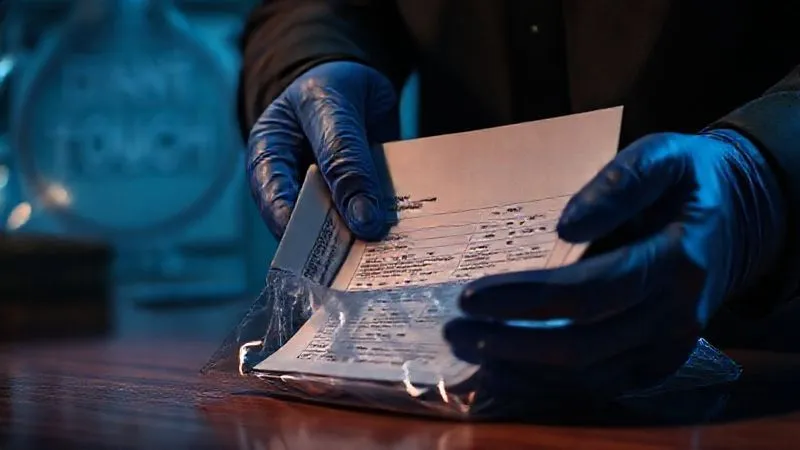
Once the initial crisis is managed, the real work of proving embezzlement begins: meticulous forensic evidence collection. This is where you transform suspicion into irrefutable facts. Your insurer will demand concrete proof, not just allegations. This phase is about connecting the dots, demonstrating intent, and quantifying the loss.
I always advise clients that the more detailed and organized your evidence, the smoother your insurance claim process will be. Think like a detective; leave no stone unturned.
Financial Records: The Indisputable Paper Trail
Financial documents are the backbone of any embezzlement claim. They tell the story of money in and money out, and often, where it shouldn't have gone. You'll need to gather a comprehensive array of documents, potentially going back several years:
- Bank statements (company and, if legally accessible, employee's)
- General ledgers and sub-ledgers
- Accounts payable and receivable records
- Payroll records, timecards, and expense reports
- Invoices, purchase orders, and vendor agreements
- Credit card statements (company and, if legally accessible, employee's)
- Inventory records and reconciliation reports
- Tax returns (company)
Look for discrepancies: missing deposits, unusual vendor payments, inflated expenses, unauthorized wire transfers, or unexplained inventory shortages. Often, the pattern of small, repeated thefts reveals itself over time.
Digital Forensics: Uncovering Hidden Data
In today's digital age, much of the evidence resides on computers, servers, and cloud platforms. Engaging a reputable digital forensics expert is often non-negotiable, especially for larger or more complex cases.
They can:
- Recover deleted files, emails, and chat logs.
- Analyze access logs to determine who accessed what and when.
- Trace IP addresses and digital footprints.
- Image hard drives to preserve data in an unalterable state.
Remember, tampering with digital evidence can severely undermine your claim. Always rely on certified professionals for this delicate task.
Witness Statements and Interviews
While financial evidence is primary, human testimony can provide crucial context and corroboration. This might include:
- Interviews with colleagues who observed suspicious behavior.
- Statements from vendors or clients who noticed irregularities.
- Testimony from internal auditors or external accountants.
These interviews should be conducted by legal counsel or a qualified investigator to ensure they are done ethically and legally, protecting both the interviewee and your company.
| Evidence Type | Key Documents | Purpose |
|---|---|---|
| Financial Records | Bank statements, Ledgers, Invoices, Payroll | Quantify loss, show transaction patterns |
| Digital Forensics | Emails, Chat logs, Access logs, Deleted files | Prove intent, identify accomplices, trace digital footprint |
| Physical Evidence | Security footage, Inventory counts, Access cards | Corroborate presence, physical theft |
| Witness Statements | Interview transcripts, Affidavits | Provide context, corroborate financial data |
According to a report by Deloitte, the average time to detect fraud is 14 months, highlighting the need for continuous monitoring and a structured response when anomalies appear. The more comprehensive your evidence, the stronger your position will be when you need to prove employee embezzlement for an insurance claim.
"The truth is often hidden in plain sight, scattered across disparate documents and digital trails. Your job is to meticulously gather these fragments and weave them into an undeniable narrative of fraud."

Navigating the Insurance Claim Process: What Your Policy Covers
Once you've diligently gathered your evidence, the next critical step is to understand the specifics of your business crime insurance policy. This isn't a one-size-fits-all situation; policies vary significantly in their coverage scope, definitions, and requirements for proving employee embezzlement for an insurance claim.
I always tell my clients: don't assume. Read your policy thoroughly, or better yet, have your broker or legal counsel review it. Key areas to focus on include the definition of 'employee dishonesty,' the types of losses covered, and any specific evidentiary requirements.
Fidelity Bonds vs. Employee Dishonesty Coverage
Many businesses mistakenly use these terms interchangeably, but there are important distinctions:
- Fidelity Bonds: These are typically purchased by employers to protect against losses caused by dishonest acts of employees. They often cover specific positions or groups of employees. There are two main types: 'first-party' bonds, which cover losses to the employer, and 'third-party' bonds, which protect clients from dishonest acts of employees working on their premises.
- Employee Dishonesty Coverage: This is usually a component of a broader business crime insurance policy or a separate standalone policy. It's designed to reimburse the employer for financial losses due to theft of money, securities, or other property by an employee. This coverage is generally broader than a fidelity bond and covers all employees unless specifically excluded.
Understanding which type of coverage you have, and its specific limits and deductibles, is paramount. Pay close attention to clauses defining 'employee' (e.g., does it include temporary staff or contractors?) and 'dishonest acts' (e.g., does it require intent to cause loss or gain a benefit?).
Your policy will also outline specific timeframes for reporting a loss and submitting proof of loss. Missing these deadlines can jeopardize your claim, regardless of how strong your evidence is. For a deeper dive into these distinctions, you can refer to resources from industry experts like IRMI (International Risk Management Institute).
"Your insurance policy is more than just a piece of paper; it's your roadmap to recovery. Understand its contours, and you'll navigate the claim process with far greater confidence."
The Embezzlement Claim Submission: Presenting Your Proof
With your evidence meticulously collected and your policy understood, the final hurdle is compiling and submitting a compelling claim. This is where all your hard work culminates. A well-structured claim package significantly increases your chances of a swift and successful resolution.
In my experience, insurers appreciate clarity, conciseness, and undeniable evidence. Don't overwhelm them with raw data; present a coherent narrative supported by detailed documentation.
Key Steps for a Successful Claim Submission
- Prepare a Detailed Narrative: Begin with a clear, chronological account of the embezzlement. Explain when it was discovered, by whom, the methods used by the perpetrator, and the steps your company took. This narrative should be factual and objective, avoiding emotional language.
- Quantify Your Loss: Provide a precise calculation of your financial loss, supported by your forensic accounting findings. Break down the loss by category (e.g., stolen cash, fraudulent transactions, inventory value). Include any associated investigative costs if your policy covers them.
- Organize Your Evidence: Present your supporting documents in a logical, indexed manner. This might include:
- Copies of relevant financial statements with fraudulent transactions highlighted.
- Bank records showing unauthorized withdrawals or transfers.
- Forensic audit reports.
- Digital forensics reports and relevant recovered communications.
- Witness statements or affidavits.
- Police reports (if filed) and any legal documents.
- Reference Policy Clauses: Explicitly link your losses and evidence to the specific coverage clauses in your business crime insurance policy. Show how your situation directly meets the policy's definitions of 'employee dishonesty' and 'covered loss.'
- Maintain Communication: Be prepared for follow-up questions from your insurer. Respond promptly and provide any additional information they request. Maintain a log of all communications.
- Consider Professional Assistance: For complex claims, consider hiring a public adjuster or a legal team specializing in insurance claims. They can act on your behalf, ensuring all requirements are met and advocating for your best interests.
The goal is to leave no room for doubt. When you need to prove employee embezzlement for an insurance claim, your submission should be so robust that the insurer can clearly see the full scope of the fraudulent activity and the resulting financial impact on your business.

Case Study: How 'Phoenix Solutions' Recovered from a CFO's Deception
Let me share a fictional, yet highly realistic, scenario that illustrates the entire process we've discussed. This isn't just theory; it's a testament to how a structured approach can turn devastating loss into a pathway for recovery.
Case Study: Phoenix Solutions and the CFO's Phantom Vendors
Phoenix Solutions, a thriving mid-sized IT consulting firm, faced a nightmare scenario. After a routine internal audit flagged unusual discrepancies in their vendor payment records, the CEO, Sarah, felt a chilling dread. Their trusted CFO, Mark, a 10-year veteran, was suspected of orchestrating a complex embezzlement scheme.
The Discovery: The audit revealed several new vendor accounts with similar names and bank details, receiving consistent, round-figure payments for services that couldn't be verified. Sarah immediately engaged legal counsel and discreetly notified her insurance broker. She then worked with an IT forensics team to secure Mark's company laptop and email archives before he was alerted.
Evidence Collection: The forensic accountants meticulously traced the phantom vendor payments, discovering they were routed to shell companies Mark had established, with funds eventually landing in his personal accounts. Digital forensics uncovered deleted emails discussing the scheme and altered invoices. Witness statements from junior accounting staff revealed Mark had insisted on handling all payments to these specific 'vendors' personally.
The Claim: Phoenix Solutions had a robust Business Crime policy with Employee Dishonesty coverage. Their legal team, leveraging the comprehensive evidence package – including forensic reports, bank statements, recreated vendor ledgers, and digital communication logs – built an irrefutable case. They quantified the loss at $1.2 million over three years.
The Outcome: The insurer, presented with such overwhelming evidence, acknowledged the claim. After a thorough review, Phoenix Solutions received significant reimbursement, covering the direct financial losses and a portion of their investigative costs as stipulated by their policy. Mark was prosecuted, and while criminal justice is a separate path, the insurance recovery was vital for the company's financial stability and ability to continue operations.
This case highlights the importance of immediate action, expert engagement, meticulous evidence collection, and a deep understanding of your insurance policy. Phoenix Solutions was able to prove employee embezzlement for an insurance claim because they followed a disciplined, professional process.
Overcoming Challenges: Common Pitfalls and Expert Strategies
Even with a solid case, proving employee embezzlement for an insurance claim isn't always straightforward. Insurers are rigorous, and you may encounter hurdles. Being prepared for these challenges is part of a robust strategy.
I've seen many claims stall or get reduced because businesses weren't ready for specific pushbacks. Here are some common pitfalls and how to navigate them:
Proving Intent
One of the biggest challenges is proving the employee's intent to defraud. It's not enough to show that money is missing; you must demonstrate that the employee deliberately caused the loss for personal gain. This is where digital communications, patterns of behavior, and forensic accounting analysis become critical. Evidence showing concealment, alteration of records, or creation of false entities strongly points to intent.
Valuation of Loss
Insurers will scrutinize the exact amount claimed. Overstating losses or failing to provide precise calculations backed by evidence can lead to disputes. Ensure your forensic accountant's report clearly delineates the stolen funds, the methodology used for calculation, and any directly related costs (like investigative expenses, if covered). Be prepared to justify every dollar.
Lack of Timely Notification
As mentioned, policies have strict notification clauses. Delaying reporting can give the insurer grounds to deny or reduce your claim, arguing that the delay prejudiced their ability to investigate. Always notify your broker or carrier as soon as you have a reasonable suspicion, even if you don't have all the evidence yet.
Insufficient Internal Controls
While not always a direct reason for denial, a glaring lack of internal controls could raise questions. Some policies might have conditions related to maintaining reasonable safeguards. This underscores the importance of preventative measures, which we'll discuss shortly. For guidance on strengthening internal controls, consider consulting resources from the Association of Certified Fraud Examiners (ACFE).
"Anticipating objections and proactively building your case to address them is the hallmark of a truly prepared claimant. Don't just present the facts; present the irrefutable truth."
Preventative Measures: Fortifying Your Business Against Future Threats
While this guide focuses on how to prove employee embezzlement for an insurance claim, the best defense is always a strong offense. Implementing robust internal controls and fostering a culture of integrity can significantly reduce your vulnerability to internal fraud.
I always emphasize to clients that prevention is far less costly and emotionally taxing than recovery. A few proactive steps can save your business from immense future pain.
Essential Internal Controls to Implement
- Segregation of Duties: No single employee should have control over an entire financial transaction from start to finish. For example, the person who records cash receipts should not be the same person who makes bank deposits or reconciles the bank statement.
- Regular Audits and Reconciliations: Conduct surprise cash counts, reconcile bank statements independently, and perform regular internal or external audits of financial records.
- Strong Password Policies and Access Controls: Restrict access to sensitive financial systems and data based on job function. Implement multi-factor authentication and regularly update passwords.
- Mandatory Vacation: Ensure employees in sensitive financial positions take mandatory, uninterrupted vacations. Often, fraud schemes unravel when the perpetrator is away, and someone else covers their duties.
- Whistleblower Policy: Establish a confidential and anonymous reporting mechanism for employees to report suspicious activities without fear of retaliation.
- Background Checks: Conduct thorough background checks on all new hires, especially for positions with access to finances or sensitive data.
- Ethical Training: Regularly train employees on your company's code of ethics, fraud prevention policies, and the consequences of dishonest acts.
These aren't just bureaucratic hurdles; they are critical safeguards. By embedding these practices, you create a less hospitable environment for fraud to take root and flourish. For more comprehensive best practices on fraud prevention, insights from organizations like Forbes Advisor on Small Business Fraud Prevention can be invaluable.
| Control Measure | Benefit | Impact |
|---|---|---|
| Segregation of Duties | Prevents single-point failure, requires collusion for fraud | High |
| Regular Audits | Deters fraud, detects anomalies early | High |
| Access Controls | Limits exposure to sensitive data/funds | Medium |
| Whistleblower Policy | Early detection, fosters ethical culture | High |
Frequently Asked Questions (FAQ)
Question: Can I file a claim if the employee hasn't been charged or convicted? Absolutely. Your insurance claim is a civil matter, separate from criminal proceedings. While a conviction can strengthen your case, it is generally not a prerequisite for your insurer to review and pay a claim. The burden of proof for an insurance claim is typically 'preponderance of evidence,' which is lower than the 'beyond a reasonable doubt' standard for criminal conviction.
Question: What if the employee repays the stolen funds? If the employee repays the funds, your direct financial loss is reduced or eliminated. Your insurance policy typically covers actual losses sustained. However, you might still have incurred significant investigative costs, legal fees, or reputational damage, which may or may not be covered depending on your specific policy's terms. It’s crucial to document any repayment agreements.
Question: How long do I have to file an embezzlement claim? This varies significantly by policy. Most business crime policies have strict reporting periods, often requiring notification of a loss within a certain number of days or months of discovery, and a formal 'proof of loss' submission within another timeframe (e.g., 90 or 120 days). Always consult your specific policy documents for these critical deadlines.
Question: What role does law enforcement play in the insurance claim process? While not strictly required for an insurance claim, involving law enforcement (filing a police report) is often advisable. It creates an official record, can aid in recovering assets, and demonstrates due diligence. Some insurance policies may even require police involvement for certain types of claims. Law enforcement's investigation can also uncover evidence that further supports your insurance claim.
Question: Are legal fees covered under my business crime policy? Coverage for legal fees varies. Some business crime policies include specific provisions for 'claim preparation expenses' or 'investigation expenses,' which might encompass legal and forensic accounting fees incurred to prove the loss. However, legal fees associated with prosecuting the employee or defending against counter-claims are typically not covered unless explicitly stated. Review your policy’s 'other expenses' or 'additional coverages' sections carefully.
Key Takeaways and Final Thoughts
Navigating the treacherous waters of employee embezzlement and securing a successful insurance claim is undoubtedly one of the most challenging experiences a business owner can face. But as I've aimed to convey throughout this guide, it's a challenge that can be overcome with preparation, precision, and perseverance.
- Act Swiftly and Discretely: Your immediate response sets the stage for everything that follows. Secure evidence, consult experts, and avoid premature confrontation.
- Meticulous Documentation is Non-Negotiable: Every financial transaction, every digital trace, every witness statement contributes to building an irrefutable case.
- Understand Your Policy Inside Out: Your business crime insurance policy is your blueprint for recovery. Know its definitions, limitations, and requirements.
- Quantify Losses Accurately: Presenting a clear, substantiated calculation of your financial loss is paramount for a successful claim.
- Prevention is Your Strongest Shield: Implement robust internal controls and foster an ethical culture to minimize future vulnerabilities.
Remember, you're not alone in this. Leverage expert guidance – legal, forensic, and insurance professionals – to navigate the complexities. While the betrayal hurts, your business has the resilience to recover. By following these expert strategies, you can effectively prove employee embezzlement for an insurance claim, recover your losses, and emerge stronger, with a more secure foundation for the future.
Recommended Reading
- IP Cyber Theft: 7 Critical Steps When Your Intellectual Property is Stolen
- 7 Critical Steps: What to Do Immediately When a D&O Claim Strikes
- 7 Ways to Explain Mortgage Insurance Impact on Loan Terms to Resistant Clients
- 5 Proven Strategies to Cut Mortgage Insurance Claim Payouts After Default
- LTC Policy Won't Cover Skilled Nursing? 7 Steps to Secure Vital Care





Your email address will not be published. Required fields are marked *