



Product Liability Claims? Fortify Your Business Defenses Now
For over two decades in the business insurance trenches, I've witnessed the devastating impact product liability claims can have on even the most robust companies. It’s not just about financial loss; it’s about reputation, trust, and the very future of a brand. I've seen promising startups brought to their knees and established giants facing existential threats, all because of a single, unforeseen product flaw.
The landscape of product liability is a minefield, constantly shifting with new regulations, evolving consumer expectations, and rapid technological advancements. One faulty component, an unclear warning label, or a design flaw can trigger a cascade of legal battles, forcing businesses to divert immense resources, battle negative press, and sometimes, even cease operations. The stress and uncertainty for business owners are immense, often overwhelming those who haven't adequately prepared.
This isn't just another article reciting legal definitions. I’m here to share the actionable frameworks, real-world insights, and proactive strategies I've helped countless businesses implement to navigate and mitigate product liability risks. You'll gain a clearer understanding of your vulnerabilities and, more importantly, learn how to build an impenetrable defense that protects your bottom line and your brand's integrity.
Understanding the Pillars of Product Liability: Where Defects Arise
Before we can build defenses, we must understand the attack vectors. In my experience, most product liability claims stem from one of three fundamental types of defects. Understanding these categories is the bedrock of effective risk management, allowing you to pinpoint potential vulnerabilities in your own product lifecycle.
Manufacturing Defects: The Flaw in Production
A manufacturing defect occurs when a product departs from its intended design, even though the design itself was safe. Think of it as an anomaly in the assembly line. Perhaps a batch of raw material was contaminated, a machine calibration was off, or a worker made an error during assembly. The product, as it leaves the factory, is not what it was designed to be, making it unreasonably dangerous.
- Example: A car's brake line is improperly installed on a specific vehicle, leading to brake failure. The design for the brake system is sound, but the execution for that particular car was flawed.
- Mitigation Focus: Quality control, rigorous testing, process automation, and supplier auditing.
Design Defects: Inherently Dangerous
Unlike a manufacturing defect, a design defect means the product is inherently dangerous due to its design, even if it was manufactured perfectly. The entire product line carries the risk because the blueprint itself is flawed. This is often the most challenging type of defect to defend against, as it implies a fundamental oversight in the product's conceptualization.
- Example: A power tool is designed without a proper safety guard, making it prone to causing injury even when used as intended.
- Mitigation Focus: Comprehensive risk assessments during R&D, user testing, ergonomic studies, and adherence to industry safety standards.
Marketing Defects: The Failure to Warn
Often overlooked, marketing defects, or 'failure to warn' defects, arise when a product lacks adequate instructions or warnings about non-obvious dangers. Even a perfectly designed and manufactured product can become a liability if users aren't properly informed about its safe operation or potential risks. This is particularly crucial for products with inherent, unavoidable dangers.
- Example: A medication bottle doesn't adequately warn about severe side effects when combined with common foods or other drugs.
- Mitigation Focus: Clear, concise, and prominent warning labels, comprehensive user manuals, and consideration of all foreseeable uses and misuses.
The Strict Liability Trap: What Every Business Must Know
One of the most intimidating aspects of product liability law is the concept of strict liability. This legal doctrine fundamentally shifts the burden of proof and can leave businesses exposed even when they've exercised reasonable care. In essence, under strict liability, a plaintiff generally doesn't need to prove negligence on the part of the manufacturer or seller. They only need to demonstrate that the product was defective, the defect caused their injury, and the defect existed when the product left the defendant's control.
In my experience, many business owners mistakenly believe that if they've followed all safety protocols and acted responsibly, they are immune from product liability claims. Strict liability shatters that illusion. It's a legal framework designed to protect consumers by holding manufacturers and sellers accountable, regardless of intent or fault.
This means that even if you've done everything 'right' – your design was impeccable, your manufacturing process flawless, and your warnings comprehensive – if a court finds your product to be defective and the cause of injury, you could still be held liable. This is why a proactive and multi-faceted defense strategy is absolutely essential. It's not about avoiding mistakes, but about minimizing the chances of a defect occurring and having robust protections in place when one does.
Proactive Product Development: Building Safety In, Not Bolting On
The best defense against product liability is a strong offense, meaning safety must be an intrinsic part of your product from conception. It's far more effective and less costly to design out risks than to deal with the aftermath of a claim. I've guided numerous companies through this process, and the core principle is simple: embed safety at every stage of development.
This isn't just about meeting minimum regulatory standards; it's about anticipating potential hazards and user behaviors. According to a Deloitte study on Product Lifecycle Management, integrating risk assessment early in the design phase can reduce total lifecycle costs by up to 20% and significantly enhance product safety and compliance.
- Initial Risk Assessment & Hazard Analysis: From the very first sketch, identify potential hazards associated with the product's intended use and foreseeable misuse. Brainstorm every conceivable way the product could fail or cause harm.
- Design for Safety (DfS): Implement design choices that eliminate or reduce hazards. This could involve using safer materials, incorporating fail-safes, or simplifying user interfaces to prevent errors. Prioritize passive safety features over active ones (e.g., a permanent guard over a removable one).
- Robust Prototyping and Testing: Don't just test for functionality; test for stress, durability, and failure points under various conditions. Conduct user trials to observe how real people interact with your product, identifying unexpected behaviors or misunderstandings.
- Independent Third-Party Certification: Where applicable, seek certifications from reputable independent bodies. This not only validates your safety claims but also builds trust with consumers and regulators.
- Continuous Feedback Loop: Establish systems to collect feedback from users, customer service, and sales teams. This information is invaluable for identifying emerging issues or areas for improvement in future iterations.
By following these steps, you're not just creating a product; you're creating a product with resilience against liability built into its very DNA.

Mastering Your Supply Chain: Vetting and Vigilance
In today's interconnected global economy, your product is only as strong as its weakest link, which often resides within your supply chain. I've seen countless companies face product liability claims not because of their own direct error, but due to a defective component supplied by a third party. Effective supply chain management is not just about logistics; it's a critical component of your risk mitigation strategy.
As marketing guru Seth Godin often says about trust, 'Trust is built in drops and lost in buckets.' This applies directly to your supply chain. A single faulty component from a seemingly minor supplier can erode years of brand trust and lead to monumental legal battles.
Diligent vetting and continuous vigilance are non-negotiable. You must ensure that every raw material, every component, and every sub-assembly meets your stringent quality and safety standards. This requires more than just a handshake; it demands formal agreements, regular audits, and clear communication channels.
| Criterion | Requirement | Verification Method |
|---|---|---|
| Quality Certifications | ISO 9001, specific industry standards | Certificate review, audit reports |
| Financial Stability | Stable operations, ability to fulfill contracts | Financial statements, credit checks |
| Compliance History | No history of major regulatory violations or recalls | Public records, industry databases |
| Quality Control Processes | Documented QC procedures, testing protocols | On-site audit, sample testing |
| Insurance Coverage | Adequate product liability insurance | Certificate of Insurance (COI) review |
Actionable Steps for Supply Chain Diligence:
- Comprehensive Supplier Agreements: Include clauses that explicitly outline quality standards, testing requirements, indemnification for defects, and notification protocols for any issues.
- Regular Audits & Inspections: Don't just rely on paperwork. Conduct periodic on-site audits of your key suppliers to verify their manufacturing processes, quality control, and compliance with your specifications.
- Component Traceability: Implement robust systems to trace every component back to its origin. In the event of a defect or recall, this allows for precise identification of the affected batch, limiting the scope and cost of remediation.
- Diversify Suppliers: Where feasible, avoid single-sourcing critical components. Having alternative suppliers can provide a safety net if one experiences quality issues or disruptions.
- Monitor Supplier Performance: Track metrics like defect rates, on-time delivery, and responsiveness. Hold regular performance reviews and address any declining trends immediately.
Robust Warning Labels and User Manuals: Your First Line of Defense
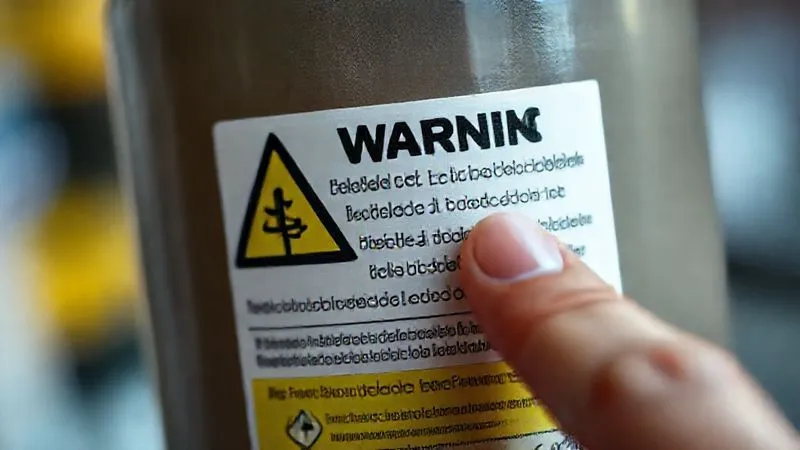
As an expert, I can't stress enough the critical role of clear, comprehensive, and conspicuous warning labels and user manuals. These aren't just legal necessities; they are your primary communication tools for ensuring safe product use and, crucially, your first line of defense against product liability claims alleging 'failure to warn.'
Think of it this way: you've designed and manufactured a safe product, but if the user misuses it due to lack of information, the liability could still fall squarely on your shoulders. The key is to anticipate all foreseeable uses and misuses, and then clearly articulate both the proper procedure and the dangers of deviation.
What Makes an Effective Warning?
- Clarity and Simplicity: Use plain language, avoid jargon, and keep sentences short. If your product is sold internationally, consider multilingual warnings.
- Prominence: Warnings must be easily noticeable. This means using appropriate font sizes, bolding, contrasting colors, and strategic placement on the product itself, not just buried in a manual.
- Specificity: Vague warnings are ineffective. Instead of 'Be careful,' specify 'Do not operate near water due to risk of electric shock.'
- Universally Understood Symbols: Incorporate internationally recognized hazard symbols (e.g., for electrical shock, flammability, crushing hazards) to transcend language barriers.
- Address Foreseeable Misuse: Consider how users might ignorantly or intentionally misuse your product and provide warnings against those specific actions.
Your user manual should complement these warnings by providing detailed, step-by-step instructions for assembly, operation, maintenance, and troubleshooting. It should also reiterate key safety information and explain the purpose of any safety features. Regularly review and update these documents, especially after product revisions or if new hazards are identified.
The Power of Product Liability Insurance: Beyond Basic Coverage
Even with the most rigorous design, manufacturing, and warning protocols, incidents can occur. This is where robust product liability insurance becomes not just a safeguard, but a critical component of your overall business resilience. It's the financial backstop that can protect your company from devastating legal costs, settlements, and judgments.
Case Study: How 'EcoBlend Juicers' Survived a Claim
EcoBlend Juicers, a mid-sized kitchen appliance manufacturer, faced a claim when a customer alleged a design defect caused a minor injury. Despite their comprehensive safety testing, the customer's legal team filed a lawsuit. Fortunately, EcoBlend had a robust product liability policy with adequate coverage limits, including defense costs. Their insurer promptly appointed experienced legal counsel, managed the discovery process, and ultimately negotiated a reasonable settlement without EcoBlend having to dip into their operational capital or face prolonged, damaging litigation. This resulted in the company maintaining its financial stability and market reputation, proving the tangible value of a well-structured insurance plan.
Many business owners make the mistake of viewing insurance as a commodity, opting for the cheapest policy. In my experience, this can be a catastrophic error. A comprehensive policy should cover more than just the basics. According to the Insurance Information Institute, product liability insurance typically covers legal fees, settlement costs, and judgments if a product causes bodily injury or property damage.
Key Considerations for Your Product Liability Policy:
- Adequate Coverage Limits: Work with an experienced insurance broker to determine limits that reflect your company's risk exposure, sales volume, and the potential severity of claims related to your product.
- Defense Costs: Ensure your policy explicitly covers legal defense costs, which can quickly become astronomical, even if you ultimately win the case.
- Worldwide Coverage: If you sell internationally, confirm your policy extends coverage to all relevant jurisdictions.
- Recall Expense Coverage: Consider adding coverage for product recall expenses, which can include notification costs, shipping, disposal, and even business interruption.
- Retroactive Date: Understand the retroactive date of your policy, which determines how far back incidents are covered.
- Exclusions: Carefully review policy exclusions. Some policies might exclude certain types of defects or specific product components.
Regularly review your policy with your broker, especially as your product line evolves, sales increase, or you enter new markets. Your insurance needs are dynamic, and your policy should reflect that evolution.
Crisis Management and Recall Protocols: When Things Go Wrong
Despite all preventative measures, a product defect can still emerge, potentially leading to a crisis or even a recall. How you respond in these moments is paramount. A well-executed crisis management plan can mitigate damage, protect your brand, and minimize legal exposure. Conversely, a poor response can amplify the problem exponentially.
I’ve helped companies navigate the choppy waters of recalls, and the difference between success and failure often boils down to preparation and speed. Hesitation or an uncoordinated response can turn a manageable incident into a public relations nightmare and a legal quagmire.
- Establish a Dedicated Crisis Team: Designate a core team (legal, PR, engineering, customer service, executive management) with clear roles and responsibilities long before an incident occurs.
- Develop a Communication Strategy: Prepare templates for internal and external communications (customers, retailers, regulators, media). Transparency and empathy are key. Appoint a single, authoritative spokesperson.
- Define Recall Triggers and Procedures: Clearly outline the criteria that would initiate a recall. Detail the step-by-step process for executing a recall, from notifying regulators to retrieving products and issuing refunds or replacements.
- Secure Legal Counsel Immediately: As soon as a potential defect or injury claim arises, engage your legal team. Their expertise is invaluable in navigating regulatory requirements and potential litigation.
- Logistics for Product Retrieval: How will affected products be returned? Who will bear the cost? Have agreements in place with distributors and retailers.
- Customer Support Plan: Anticipate a surge in inquiries. Train customer service representatives on how to handle calls, provide accurate information, and offer solutions with compassion.
| Phase | Action |
|---|---|
| Pre-Incident Planning | Form crisis team, draft communication templates, define recall triggers |
| Incident Detection | Monitor customer feedback, quality control data, internal reports |
| Investigation & Assessment | Verify defect, assess severity, determine scope of affected products |
| Decision & Notification | Decide on recall action, notify regulatory bodies (e.g., CPSC), legal counsel |
| Execution & Communication | Issue public announcement, retrieve products, manage customer inquiries |
| Post-Recall Analysis | Identify root cause, implement corrective actions, evaluate recall effectiveness |
A recall is not a failure of your product; it’s a test of your organization's integrity and preparedness. By having a robust plan, you demonstrate commitment to consumer safety, which can significantly mitigate reputational damage and legal fallout.
Legal Counsel and Continuous Compliance: Staying Ahead of the Curve
The legal landscape surrounding product liability is constantly evolving. New consumer protection laws, changes in testing standards, and emerging legal precedents mean that what was compliant yesterday might not be today. Relying on outdated information is a recipe for disaster. This is why ongoing engagement with expert legal counsel and a commitment to continuous compliance are non-negotiable.
I've seen businesses fall into the trap of 'set it and forget it' when it comes to compliance. They implement a system, pass an audit, and then assume they're covered indefinitely. This passive approach leaves them vulnerable. Proactive legal counsel isn't just for when you're in trouble; it's a strategic partnership for ongoing risk management.
How to Maintain Continuous Compliance:
- Retain Specialized Legal Counsel: Partner with a law firm or attorney specializing in product liability and regulatory compliance for your specific industry. They can provide proactive advice, interpret complex regulations, and represent you if a claim arises. For more insights on legal trends, resources like the American Bar Association's Product Liability Committee can be valuable.
- Regular Regulatory Monitoring: Implement systems to track changes in relevant safety standards, consumer protection laws, and industry-specific regulations. This could involve subscribing to legal updates, industry newsletters, or using compliance software.
- Internal Compliance Audits: Conduct periodic internal audits to assess your adherence to established safety protocols, quality control measures, and documentation requirements.
- Employee Training: Ensure all relevant employees, from design engineers to sales staff, are regularly trained on product safety, warning requirements, and compliance procedures.
- Documentation, Documentation, Documentation: Maintain meticulous records of every stage of your product's lifecycle – design specifications, testing results, quality control checks, supplier agreements, warning label reviews, and customer feedback. In a legal dispute, comprehensive documentation is your strongest ally.
By treating compliance as an ongoing process rather than a one-time event, you build a resilient legal posture that can withstand scrutiny and protect your business from unforeseen challenges.
The Digital Frontier: E-commerce and Emerging Liabilities
The advent of e-commerce has dramatically expanded market reach for businesses, but it has also introduced new layers of complexity and potential liabilities in the realm of product liability. When you sell online, your product can reach customers across states, countries, and even continents, each with its own unique legal framework and consumer protection laws. This global reach means your liability exposure is no longer confined by geographical borders.
In my experience, many businesses selling through e-commerce platforms underestimate the implications of international sales. A product that is perfectly compliant in one jurisdiction might be non-compliant, and therefore defective, in another. Furthermore, the role of online marketplaces (like Amazon or eBay) in product liability cases is a rapidly evolving area of law, with courts increasingly holding these platforms accountable under certain circumstances.
New Challenges in the Digital Age:
- Jurisdictional Complexities: Determining which country's or state's laws apply when a product sold online causes injury can be incredibly complex. This often depends on where the seller is located, where the buyer is located, and where the injury occurred.
- Cross-Border Compliance: Ensuring your product meets the safety and labeling standards of every country you ship to is a monumental task. This includes everything from electrical certifications to chemical restrictions.
- Marketplace Liability: While traditionally seen as mere facilitators, some courts are beginning to view online marketplaces as 'sellers' or 'distributors' in certain product liability contexts, especially if they store, package, or brand products. It's crucial to understand the terms and conditions of any marketplace you use.
- Digital Product Liability: For software, apps, and other digital products, the concept of a 'defect' can be abstract. Bugs, security vulnerabilities, or failures to perform as advertised can lead to claims of economic loss or data breach, blurring the lines of traditional product liability.
Actionable Advice for E-commerce Sellers:
- Geographic Compliance Strategy: Clearly define your shipping regions and proactively research the product safety and labeling requirements for each. Consider geo-blocking if compliance in certain regions is too complex or costly.
- Transparent Terms & Conditions: Ensure your website's terms of sale clearly outline limitations of liability, disclaimers, and governing law.
- E-commerce Specific Legal Counsel: Engage legal experts who specialize in internet law and international trade to help navigate these complexities. Resources like Lexology's e-commerce liability guides can offer starting points.
- Robust Digital Security: For digital products, invest heavily in cybersecurity to prevent vulnerabilities that could lead to liability.
- Clear Digital Warnings: Ensure any digital product includes clear disclaimers, usage instructions, and warnings within the application or software itself.
Frequently Asked Questions (FAQ)
Question: What's the fundamental difference between negligence and strict liability in product liability cases? The core difference lies in what a plaintiff needs to prove. In a negligence-based product liability claim, the plaintiff must demonstrate that the manufacturer or seller failed to exercise reasonable care (i.e., was negligent) in the design, manufacturing, or warning of the product, and this negligence caused their injury. For example, if a manufacturer knowingly used substandard materials to save money. Under strict liability, however, the plaintiff generally does not need to prove negligence. They only need to show that the product was defective, the defect made it unreasonably dangerous, and the defect existed when the product left the defendant's control, causing their injury. The focus shifts from the defendant's conduct to the product's condition.
Question: How does product liability apply to services or digital products, which aren't tangible? This is an evolving area of law. While traditional product liability primarily focuses on tangible goods, the principles can sometimes extend. For services, if a service provider uses a defective product as part of their service (e.g., a hairdresser using a defective chemical treatment), product liability could still apply to the product manufacturer. For digital products like software or apps, the concept of a 'defect' might relate to bugs, security vulnerabilities, or a failure to perform as advertised, leading to economic loss or data breaches. While not always falling under strict product liability, these issues can lead to claims under breach of warranty, contract law, or consumer protection statutes. It's crucial to have robust end-user license agreements (EULAs) and disclaimers.
Question: What are the key components of a robust product recall plan? A robust product recall plan should include: 1) A designated crisis management team with clear roles; 2) Defined triggers for initiating a recall; 3) A clear communication strategy for internal stakeholders, regulators (e.g., CPSC in the U.S.), customers, and the media; 4) Detailed procedures for identifying, isolating, and tracking affected products; 5) Logistics for product retrieval, repair, replacement, or refund; 6) A customer support plan to handle inquiries; 7) Legal counsel engagement from the outset; and 8) A post-recall analysis to identify root causes and implement corrective actions to prevent recurrence.
Question: Can I be held liable if I'm just a distributor or retailer, not the manufacturer? Yes, absolutely. In many jurisdictions, all parties in the chain of distribution—manufacturers, distributors, wholesalers, and retailers—can be held liable for a defective product, often under strict liability. While a retailer or distributor might have recourse against the manufacturer for indemnification, they can still be named as defendants in a lawsuit. This underscores the importance of vetting your suppliers, ensuring they carry adequate product liability insurance, and having clear contractual agreements that outline indemnification.
Question: How often should I review my product liability insurance policy? You should review your product liability insurance policy at least annually, during your renewal period. However, it's also critical to review it whenever there are significant changes to your business, such as: launching new products, expanding into new markets (especially international), increasing sales volume, changing manufacturing processes, or altering your supply chain. These changes can significantly impact your risk exposure and may necessitate adjustments to your coverage limits or terms.
Key Takeaways and Final Thoughts
Navigating the complex world of product liability doesn't have to be a terrifying ordeal for your business. As I've outlined, the path to resilience is built on proactive planning, diligent execution, and continuous vigilance. It's about embedding safety into every fiber of your operation, from the initial design concept to the post-sale customer experience.
- Prioritize Prevention: Design for safety, conduct rigorous testing, and implement stringent quality control.
- Vet Your Ecosystem: Be meticulous in auditing and managing your supply chain to mitigate third-party risks.
- Communicate Clearly: Invest in robust, unambiguous warning labels and user manuals.
- Insure Wisely: Secure comprehensive product liability insurance with adequate limits and understand its scope.
- Plan for the Worst: Develop and regularly practice a detailed crisis management and product recall plan.
- Stay Compliant: Engage expert legal counsel and commit to continuous monitoring of regulatory changes.
Remember, your business's reputation and financial health are precious. By taking these expert-backed steps, you're not just protecting against potential lawsuits; you're building a foundation of trust with your customers and ensuring the long-term sustainability of your enterprise. The time to fortify your defenses against product liability claims isn't after an incident occurs; it's now.
Recommended Reading
- 5 Critical Steps: How to Address CGL Policy Gaps for Evolving Cyber Risks?
- Denied PMI Removal? 7 Strategies to Force Lender Action on High Equity
- Unmasking Sophisticated Fraud: 7 Steps to Rapid Claim Detection
- Unlocking Peace of Mind: How Travel Insurance Covers Pre-Existing Conditions
- The Ultimate Guide: What to Look for in Single Trip Travel Insurance




Your email address will not be published. Required fields are marked *