

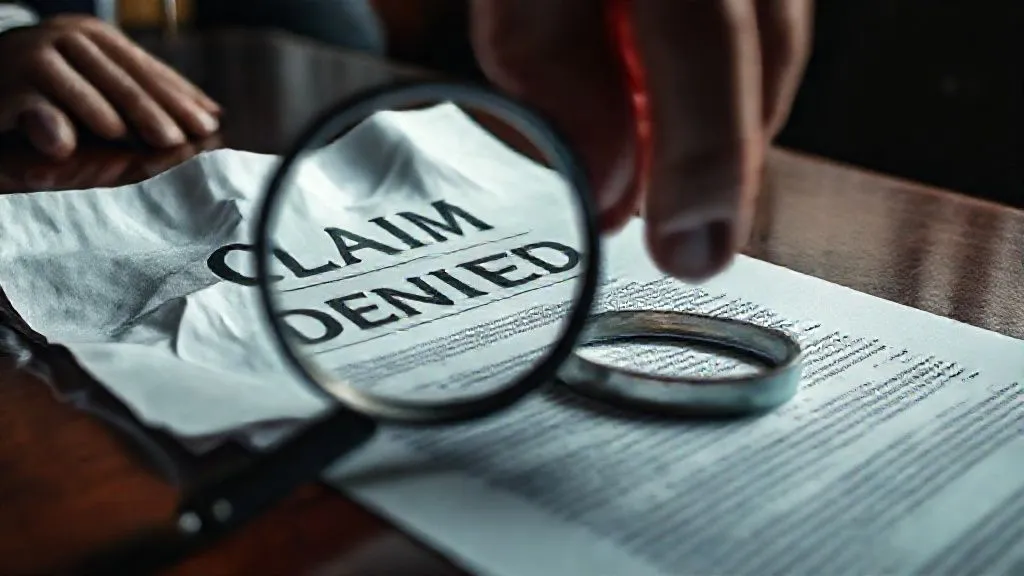
For over two decades in the commercial insurance trenches, I've witnessed countless businesses, from thriving startups to established enterprises, face a devastating blow: a commercial umbrella claim denial. It's a gut-wrenching experience, often stemming from a seemingly minor oversight – a gap in coverage that goes unnoticed until it’s too late.
The problem is insidious. Many business owners believe their umbrella policy is an impenetrable shield, offering blanket protection above their primary limits. However, without meticulous attention to detail and a deep understanding of how these policies interact, that shield can be riddled with holes, leaving your business exposed to catastrophic financial loss.
This article isn't just a collection of facts; it's a roadmap forged from years of experience. I'll walk you through actionable frameworks, real-world insights, and concrete steps to proactively identify and seal those critical gaps, ensuring your commercial umbrella policy delivers the protection you expect when you need it most. Let's tackle the urgent task of how to avoid commercial umbrella claim denial due to gaps, together.
Understanding the Anatomy of Commercial Umbrella Policy Gaps
Before we dive into solutions, we must first understand the enemy: the coverage gap. These aren't always obvious exclusions; sometimes they're subtle misalignments or misunderstandings of policy interplay. A gap is any situation where your commercial umbrella policy fails to provide coverage when an underlying policy limit is exhausted, leaving your business directly responsible for the excess.
What are Coverage Gaps, Really?
A coverage gap arises when your umbrella policy either doesn't 'drop down' to cover a loss that's excluded by your underlying policies, or when the terms and conditions of your umbrella policy don't perfectly 'follow form' with your primary coverages. This creates a dangerous void between what your primary policy covers and what your umbrella policy is willing to pay. It’s a silent threat, often discovered only when a major claim hits.
Common Scenarios Leading to Denial
I've seen these scenarios play out too many times, leading to heartbreaking commercial umbrella claim denial. They often involve:
- Underlying Policy Exclusions: Your primary General Liability policy might exclude certain activities (e.g., professional services, specific types of hazardous work), and if your umbrella policy doesn't explicitly 'drop down' to cover these, you have a gap.
- Insufficient Underlying Limits: If your umbrella policy requires a minimum underlying limit for a specific coverage line (e.g., Auto Liability) and your primary policy falls short, the umbrella might not activate until that minimum is met, leaving a self-insured retention.
- Different Policy Forms/Language: When the definitions, terms, or conditions between your underlying policies and your umbrella policy don't perfectly align, an incident that's covered by one might be excluded by the other.
- Geographical or Jurisdictional Limitations: Your primary policy might cover operations in one country, but your umbrella has a more restrictive territorial clause, creating a gap for international incidents.
- Failure to Maintain Underlying Coverage: Allowing an underlying policy to lapse, even for a day, can void your umbrella coverage for that period.
In my experience, the biggest mistake businesses make is assuming their umbrella policy is a universal safety net. It's not. It's a meticulously engineered extension, and its strength is only as good as the foundation it rests upon.
Step 1: Conduct a Comprehensive Underlying Policy Audit
The first and most critical step to avoid commercial umbrella claim denial due to gaps is to meticulously audit your underlying insurance policies. Your commercial umbrella policy doesn't stand alone; it's built upon the foundation of your primary General Liability, Auto Liability, Employers' Liability, and other coverages. Any weakness in this foundation will inevitably manifest as a gap in your umbrella protection.
Why Your Primary Policies Are the Foundation
Think of your insurance portfolio as a multi-layered cake. The underlying policies are the base layers, and the umbrella is the top, overarching layer. If there's a missing ingredient or a hole in one of the base layers, the top layer won't magically fill it. The umbrella policy typically only kicks in once the limits of your underlying policies are exhausted, or in rare cases, 'drops down' to cover a specific exposure not covered by underlying insurance but explicitly covered by the umbrella.
Here’s how to conduct an effective audit:
- Gather All Current Policies: Collect every single underlying policy document – not just summaries, but the full policy forms including declarations, exclusions, and endorsements.
- Verify Effective Dates and Expiration Dates: Ensure there are no lapses in coverage between policies. A single day without underlying coverage can be catastrophic for an umbrella claim.
- Confirm Named Insureds: Check that all entities, subsidiaries, and individuals requiring coverage are consistently named across all underlying policies and the umbrella policy. Inconsistencies here are a common cause of denial.
- Review Coverage Territories: Compare the geographical scope of each underlying policy with your actual business operations and the umbrella policy's territory.
- Identify All Endorsements and Exclusions: Pay close attention to any modifications. These often create the subtle differences that lead to gaps.

Step 2: Align Umbrella Limits with Underlying Coverage
One of the most frequent causes of commercial umbrella claim denial due to gaps is a mismatch between the limits and terms of the underlying policies and the umbrella policy. Your umbrella isn't just an 'extra layer' of protection; it's designed to seamlessly sit atop your primary limits.
The 'Follow Form' Principle and Its Pitfalls
Many commercial umbrella policies are 'follow form,' meaning they generally adopt the terms, conditions, and exclusions of the underlying policies. This sounds ideal, but it's not always a perfect replication. Sometimes, an umbrella policy might specify its own minimum underlying limits for certain coverages. If your primary policy falls below this minimum, you could be left with a self-insured retention, effectively a gap, before the umbrella kicks in.
Case Study: How Nexus Logistics Faced a Million-Dollar Gap
Nexus Logistics, a mid-sized trucking company, diligently purchased a $5 million commercial umbrella policy over their $1 million Auto Liability. They believed they were well-protected. However, their umbrella policy had a specific clause requiring a minimum of $2 million in underlying Auto Liability for certain types of interstate hauls, a detail Nexus's broker had overlooked. When a catastrophic accident occurred on an interstate route, resulting in a $3.5 million judgment, Nexus's primary Auto Liability paid its $1 million. But instead of the umbrella dropping down immediately, it required Nexus to cover an additional $1 million (the difference between their $1M underlying and the umbrella's $2M required minimum) out of pocket before its coverage began. This oversight led to a devastating $1 million gap, highlighting the urgent need to avoid commercial umbrella claim denial due to such subtle mismatches.
To prevent this, you need to conduct a thorough limit comparison:
| Coverage Type | Underlying Limit | Umbrella Required Min | Gap Identified |
|---|---|---|---|
| General Liability | $1,000,000 | $1,000,000 | No |
| Auto Liability | $1,000,000 | $2,000,000 | $1,000,000 |
| Employers' Liability | $500,000 | $500,000 | No |
Step 3: Scrutinize Exclusions and Endorsements
This is where the devil truly lies in the details. While umbrella policies are designed to broaden coverage, they also come with their own set of exclusions and endorsements that can carve out significant gaps. Failing to understand these can be a direct path to a commercial umbrella claim denial.
Decoding the Fine Print: What's NOT Covered?
Exclusions specify what the policy will not cover, regardless of whether it's covered by an underlying policy. Endorsements are modifications to the standard policy language, either adding or removing coverage. It's crucial to read both your underlying and umbrella policies side-by-side, specifically looking for differences in these sections.
Common exclusions and endorsements that create gaps include:
- Professional Liability Exclusions: Many commercial umbrella policies exclude professional services liability, assuming you have a separate E&O policy. If you don't, or if your E&O limits are insufficient, you have a gap.
- Care, Custody, or Control Exclusions: If your business handles property belonging to others, a general exclusion here could mean a denial if that property is damaged.
- Pollution Exclusions: Standard policies often have broad pollution exclusions. If your business has any environmental exposure, you need specialized coverage, and your umbrella must align.
- Cyber Liability Exclusions: Increasingly, cyber incidents are explicitly excluded from general liability and umbrella policies. A separate cyber policy is essential, and its limits should be considered in your overall risk strategy.
- Punitive Damages Exclusions: Some states allow punitive damages, but many umbrella policies, especially those written on a 'duty to defend' basis, may exclude them.
Never assume. Always verify. The language in your exclusions and endorsements is not boilerplate; it's the specific legal framework that dictates when your policy will respond. When in doubt, seek a legal review or an expert opinion from your broker.
Step 4: Proactive Risk Assessment and Exposure Review
Your business is not static. It evolves, expands, and faces new risks. An insurance policy that fit perfectly last year might have glaring gaps today. A proactive risk assessment is paramount to avoid commercial umbrella claim denial due to gaps that arise from changing business operations.
Beyond the Policy: Understanding Your Business's Evolving Risks
Insurance policies are designed to cover known risks. If your business undertakes a new project, expands into a new market, acquires a new subsidiary, or introduces a new product or service, your existing policies might not cover the new exposures. This creates an immediate gap, potentially leaving your umbrella policy unable to respond.
I advise my clients to conduct an annual, in-depth risk assessment:
- Review Business Operations: Document any new services, products, geographical expansions, mergers, acquisitions, or significant changes in your supply chain.
- Assess Contractual Obligations: Scrutinize new contracts for indemnification clauses, hold-harmless agreements, and insurance requirements that might exceed your current coverage.
- Analyze Property and Equipment: Update your inventory of owned or leased property, vehicles, and specialized equipment. Ensure their values are accurately reflected.
- Evaluate Employee Activities: Consider any new employee roles, international travel, or remote work arrangements that might alter your liability profile.
- Consult Industry Trends: Stay informed about emerging risks specific to your industry, such as new cyber threats, regulatory changes, or evolving litigation trends. According to a Deloitte report on global risks, businesses often underestimate the pace of change in their risk landscape.

Step 5: Ensure Consistent Reporting and Timely Updates
The information you provide to your insurer forms the basis of your coverage. If that information becomes outdated or inaccurate, it can create a material misrepresentation, which is a prime reason for commercial umbrella claim denial. Timely and consistent reporting is not just good practice; it's crucial for maintaining valid coverage.
The Peril of Outdated Information
I've seen claims denied because a business acquired a new location or a new division, but failed to inform their insurer. When an incident occurred at the new, unreported location, the umbrella policy, and sometimes even the underlying policy, refused to cover the loss. Your insurance policy is a living document, and it needs to reflect the current state of your business.
Always ensure you are promptly reporting:
- New Locations or Business Entities: Any new addresses, subsidiaries, or affiliated companies must be added to your policies.
- Significant Revenue Changes: Often, premiums are tied to revenue. Significant increases or decreases should be reported, as they can affect your exposure profile.
- Changes in Operations: If you start offering a new service, manufacturing a new product, or fundamentally change your business model, your insurer needs to know.
- Acquisitions or Divestitures: Mergers and acquisitions dramatically alter your risk profile and must be immediately communicated to your broker and insurer.
- Changes in Employee Count or Payroll: Especially relevant for Workers' Compensation and Employers' Liability, these figures impact your overall exposure.
As Seth Godin often emphasizes in his business philosophy, transparency and proactive communication are key to building trust, and this extends to your relationship with your insurer. Maintain an open dialogue with your broker and provide updates as soon as changes occur, not just at renewal.
Step 6: Leverage Technology for Policy Management and Gap Analysis
In today's complex insurance landscape, relying solely on manual processes for policy management is a recipe for error and a breeding ground for gaps. Modern technology offers powerful tools to help businesses proactively identify and avoid commercial umbrella claim denial.
Modern Tools for Mitigating Risk
Insurance technology (insurtech) solutions, risk management information systems (RMIS), and even advanced spreadsheet models can help you centralize your policy data, track key dates, compare coverage terms, and even flag potential mismatches. These tools provide a holistic view of your insurance portfolio, making it easier to spot inconsistencies that a manual review might miss.
Benefits of leveraging technology include:
- Centralized Document Repository: Store all policy documents, endorsements, and communications in one secure, accessible location.
- Automated Alerts: Set reminders for policy renewals, audit deadlines, and reporting requirements.
- Coverage Comparison Tools: Some platforms allow you to upload policies and compare terms, limits, and exclusions side-by-side, highlighting disparities.
- Data Visualization: Dashboards can present your coverage landscape in an easy-to-understand visual format, making gaps more apparent.
- Audit Trails: Maintain a clear record of all policy changes, communications with your broker, and internal reviews.

| Feature | Manual Process | Tech Solution Benefits |
|---|---|---|
| Policy Document Storage | Physical files, disparate digital folders | Centralized, searchable, version control |
| Gap Identification | Line-by-line comparison, prone to oversight | Automated comparison, discrepancy flagging |
| Renewal Management | Calendar reminders, email threads | Automated alerts, workflow management |
| Reporting & Analytics | Spreadsheets, basic summaries | Dynamic dashboards, predictive insights |
Step 7: Partner with a Specialized Commercial Insurance Broker
While technology and diligence are crucial, nothing replaces the expertise of a seasoned commercial insurance broker. They are your frontline defense against gaps and the most valuable resource in your quest to avoid commercial umbrella claim denial.
The Indispensable Role of Expertise
A specialized broker understands the nuances of various policy forms, the specific requirements of different carriers, and the evolving risk landscape of your industry. They act as your advocate, helping you navigate complex policy language and ensuring your coverage aligns with your unique business exposures. They don't just sell policies; they provide strategic risk management advice.
A good broker will:
- Conduct In-depth Needs Analysis: Go beyond standard questionnaires to truly understand your operations, contracts, and risk tolerance.
- Perform Policy Comparisons: Actively compare your underlying and umbrella policies, identifying potential gaps and recommending solutions.
- Negotiate with Carriers: Leverage their relationships and expertise to secure the best terms and conditions, sometimes even negotiating custom endorsements to fill specific gaps.
- Educate You: Explain complex policy language in plain terms, ensuring you understand exactly what you're buying.
- Advocate During Claims: While the goal is to avoid denial, if a claim does occur, a good broker will assist you through the process, advocating on your behalf.
Choosing a broker isn't just about finding the cheapest premium; it's about finding a true partner in risk management. Look for someone with deep experience in your specific industry and a proven track record of proactive client service. Organizations like the Council of Insurance Agents & Brokers can be a good starting point for finding reputable professionals.
Frequently Asked Questions (FAQ)
Q: What's the fundamental difference between an umbrella policy and an excess liability policy, and why does it matter for gaps?
A: While often used interchangeably, there's a critical distinction. An excess liability policy typically provides additional limits 'over' a specific underlying policy and generally 'follows form' exactly, meaning it offers no broader coverage than the underlying. An umbrella policy, on the other hand, can provide broader coverage, sometimes 'dropping down' to cover claims not covered by your underlying policies (subject to a self-insured retention or deductible). This 'drop down' feature is where gaps can appear if the umbrella's specific terms for dropping down don't align with your underlying exclusions or if the self-insured retention is unexpectedly high. Understanding which type you have is crucial for identifying potential gaps.
Q: How often should I review my commercial umbrella policy and all underlying coverages?
A: At a minimum, you should conduct a comprehensive review annually, well in advance of your renewal date. However, any significant changes to your business – such as new locations, products, services, major contracts, acquisitions, or even changes in key personnel – should trigger an immediate review with your broker. Proactive, ongoing review is key to avoid commercial umbrella claim denial.
Q: Can a coverage gap be fixed after a claim has already occurred?
A: Unfortunately, no. Insurance policies are contracts based on known risks at the time of policy issuance or renewal. If a gap is discovered after a claim event, the insurer will typically deny coverage based on the policy terms that existed at the time of the loss. This underscores the 'urgent' nature of proactively identifying and closing gaps before an incident occurs.
Q: What if my underlying policies have different effective dates than my umbrella policy? Does that create a gap?
A: Yes, it absolutely can create significant gaps and complications. Ideally, all your underlying policies and your commercial umbrella policy should have coinciding effective and expiration dates. If they don't, there could be periods where your underlying coverage has lapsed, or the umbrella's terms might not align with the underlying policy in effect at the time of a loss. This misalignment can be a strong basis for a commercial umbrella claim denial. Work with your broker to synchronize these dates whenever possible.
Q: Is a 'follow form' umbrella policy always the safest option to avoid gaps?
A: While a 'follow form' umbrella policy aims for seamless integration with underlying policies, it's not inherently 'safer' without careful review. It merely means the umbrella generally adopts the underlying policy's terms. If the underlying policy has significant exclusions or limitations, a 'follow form' umbrella will inherit those same restrictions, potentially creating gaps for risks your business faces. A truly robust solution involves understanding both the underlying and umbrella policy forms, identifying any discrepancies, and using endorsements to tailor coverage where necessary, regardless of whether it's 'follow form' or a broader 'stand-alone' umbrella.
Key Takeaways and Final Thoughts
Navigating the complexities of commercial umbrella insurance can feel daunting, but the stakes are too high to leave anything to chance. The urgent need to avoid commercial umbrella claim denial due to gaps is not just about protecting your balance sheet; it's about safeguarding the future of your business and the livelihoods of your employees.
- Audit Relentlessly: Your underlying policies are the bedrock. Review them annually and with every significant business change.
- Align Perfectly: Ensure your umbrella's limits and terms seamlessly integrate with your primary coverages, paying close attention to minimum underlying requirements.
- Read the Fine Print: Exclusions and endorsements are not suggestions; they are contractual obligations that define your coverage.
- Assess Proactively: Your business evolves, and so should your risk strategy. Don't let new exposures turn into unexpected gaps.
- Communicate Constantly: Keep your broker informed of every operational change to ensure your policies reflect your current reality.
- Embrace Technology: Leverage digital tools to streamline policy management and identify discrepancies.
- Partner Wisely: A specialized commercial insurance broker is your most vital ally in this complex journey.
Remember, your commercial umbrella policy is a powerful tool, but like any sophisticated instrument, it requires careful calibration and maintenance. By taking these proactive, expert-driven steps, you can confidently fortify your business against the unforeseen, ensuring that when the storm hits, your umbrella truly provides the protection it's meant to. Stay vigilant, stay informed, and secure your business's future. For further reading on best practices in risk management, consider resources from reputable organizations like the Risk Management Association.
Recommended Reading
- 7 Essential Strategies: Mitigating Agritourism Liability Risks & Claims
- Unlock Your VA Home Loan: Master Funding Fee Waiver Requirements
- 5 Strategies: Secure Business Wealth When a Critical Employee Quits?
- 5 Steps: Claiming First-Party Cyber for Ransomware Revenue Loss
- Cut Turnover by 20%: Can Pet Accident/Illness Plans Secure Loyalty?




Your email address will not be published. Required fields are marked *