



Denied commercial auto coverage due to high risk: what to do?
For over two decades in the Property & Casualty insurance sector, particularly within commercial auto, I've witnessed firsthand the profound challenges businesses face when they're suddenly left without essential coverage. The call often starts with panic: "My commercial auto coverage was denied due to high risk! What do I do now?" It's a gut-wrenching moment that can bring business operations to a grinding halt.
This isn't just a bureaucratic hurdle; it's a direct threat to your livelihood, impacting everything from delivery schedules and service calls to employee commutes and legal liabilities. The pain point is palpable: a business can't operate legally or safely without proper commercial auto insurance, and a denial, especially due to a "high-risk" label, feels like a dead end.
But here's the crucial insight I want to share: a denial isn't the end of the road. In this definitive guide, I'll walk you through a proven framework, backed by years of industry experience, to understand the 'why' behind the denial, identify actionable steps to mitigate your risk profile, and ultimately secure the commercial auto coverage your business desperately needs. We'll explore strategies, carrier options, and expert insights that have helped countless businesses navigate this very challenge.
Understanding Why You Were Denied: Unpacking the "High-Risk" Label
When an insurer labels your business as "high-risk," it means their underwriting models predict a higher likelihood of claims, leading to potential financial losses for them. This isn't a personal attack; it's a data-driven assessment. Understanding the common culprits is your first step towards rectification.
Common Factors Leading to High-Risk Designation:
- Driver History: A history of accidents, traffic violations (DUI, reckless driving), or inexperienced drivers on your roster is a major red flag.
- Vehicle Type & Usage: Certain vehicles (e.g., heavy trucks, hazardous material transporters) or specific uses (e.g., long-haul trucking, passenger transport) inherently carry higher risks.
- Operating Territory: Businesses operating in high-crime areas, regions prone to severe weather, or densely populated urban centers often face increased risk scores.
- Claims History: A pattern of frequent or severe claims from your business, even if not your fault, signals potential instability to underwriters.
- Industry & Business Type: Some industries (e.g., construction, waste management, towing) are statistically more prone to auto accidents and thus considered higher risk.
- Lack of Safety Protocols: Absence of formal driver training, vehicle maintenance schedules, or safety policies can indicate a lax approach to risk management.
As I often tell my clients, the insurer's job is to assess and price risk. If your profile doesn't fit their standard appetite, they'll decline. It's not always about being "bad"; sometimes it's simply a mismatch with their specific underwriting guidelines. Your goal is to either change your profile or find a carrier whose appetite aligns with your current risk level.
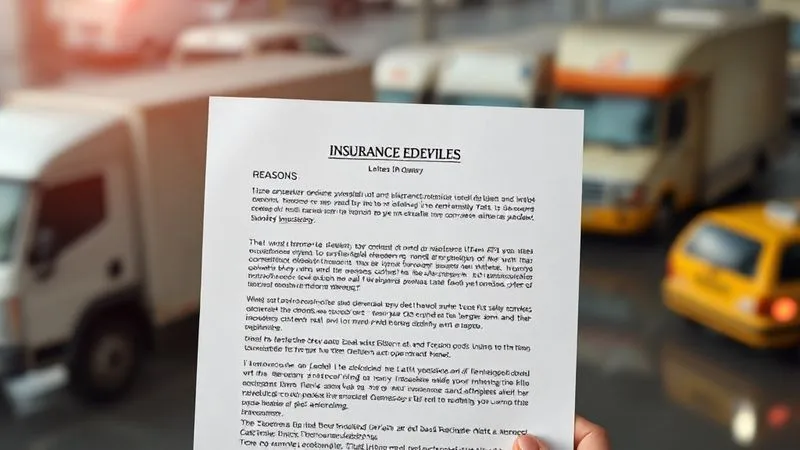
Immediate Steps After a Commercial Auto Insurance Denial
Receiving a denial can feel paralyzing, but immediate action is crucial. Don't just file the letter away; use it as a roadmap.
- Review the Denial Letter Carefully: This document is not just a 'no'; it's often a detailed explanation of why. Look for specific reasons cited, as these are your primary targets for improvement.
- Request a Detailed Explanation: If the letter is vague, call the underwriting department or your broker. Ask specific questions: "What specific factors led to this high-risk designation?" "What changes would make my business more insurable?" This direct feedback is invaluable.
- Document Everything: Keep a meticulous record of all communications, denial letters, and any information you gather. This paper trail will be critical if you need to appeal or seek alternative coverage.
- Consult an Independent Insurance Broker Specializing in Commercial Auto: This is perhaps the most critical step. An independent broker isn't tied to a single carrier. They have access to a wide network, including non-standard and specialty insurers who cater specifically to high-risk clients. They can analyze your denial, understand the market, and present your business in the best possible light to potential insurers.
"In my experience, many businesses make the mistake of trying to navigate the insurance market alone after a denial. An experienced broker is your advocate, translating industry jargon and opening doors to markets you might not even know exist."
Strategies for Mitigating Risk and Improving Your Profile
Once you understand the reasons for denial, it's time to proactively address them. This isn't a quick fix, but a strategic investment in your business's long-term insurability.
Practical Steps to Reduce Perceived Risk:
- Driver Management & Training:
- Implement a rigorous driver screening process, including MVR (Motor Vehicle Record) checks.
- Mandate defensive driving courses for all commercial drivers.
- Consider telematics devices to monitor driver behavior (speeding, harsh braking, rapid acceleration).
- Vehicle Maintenance & Safety:
- Establish and adhere to a strict preventative maintenance schedule for all vehicles.
- Install safety features like backup cameras, dash cams, and collision avoidance systems.
- Ensure regular vehicle inspections are conducted and documented.
- Operational Changes:
- Review and update your company's safety policies and procedures.
- If possible, consider altering routes or service areas to avoid particularly high-risk zones.
- Implement stricter loading/unloading protocols if cargo-related incidents are a factor.
According to a study by The Insurance Institute for Highway Safety (IIHS), companies that implement robust safety programs and telematics can see a significant reduction in accident frequency and severity, directly impacting their risk profile. This proactive approach shows underwriters you are serious about managing risk.

Case Study: How Apex Logistics Secured Coverage After Multiple Denials
Apex Logistics, a regional delivery service, faced repeated denials due to a high frequency of minor fender-benders and a few speeding tickets among their drivers. Their operations were at risk. By implementing a three-pronged approach – mandatory defensive driving refreshers, installation of dash cams in all 15 vehicles, and a new incentive program for accident-free driving – they transformed their risk profile. Over six months, their incident rate dropped by 40%. This allowed their broker to present a compelling narrative to a specialty carrier, highlighting their commitment to safety, and they successfully secured comprehensive coverage, albeit at a slightly higher initial premium. This resulted in continued operations and a path to lower premiums in the long run.
Exploring Non-Standard & Specialty Commercial Auto Carriers
The standard insurance market has specific risk appetites. When you fall outside those, it’s time to look at the non-standard or specialty markets. These carriers specialize in insuring risks that standard insurers deem too high, complex, or unique.
What to Expect from Non-Standard Carriers:
- Higher Premiums: This is the trade-off for increased risk. Expect to pay more, at least initially.
- More Stringent Underwriting: While they accept higher risk, they will scrutinize your operations thoroughly.
- Specialized Coverage: They might offer more tailored policies for niche industries or specific high-risk scenarios.
- Focus on Improvement: They often look for a clear plan of action to reduce risk over time, with the expectation that premiums will adjust as your profile improves.
Working with an experienced independent broker is paramount here. They know which carriers operate in this niche, understand their specific underwriting criteria, and can package your application effectively. They can also advise on state-specific programs or assigned risk pools if direct coverage remains elusive.
Leveraging Technology for Risk Management and Underwriting
In today's data-driven world, technology isn't just a convenience; it's a powerful tool for risk mitigation and demonstrating insurability. Underwriters are increasingly receptive to businesses that actively use technology to manage their fleet risk.
Key Technologies to Consider:
- Telematics Systems: These devices track vehicle location, speed, harsh braking, rapid acceleration, and idling time. The data provides objective evidence of driver behavior and can be shared with underwriters to demonstrate safety improvements.
- Dash Cameras (Forward-Facing & In-Cab): Dash cams provide irrefutable evidence in the event of an accident, protecting your drivers from false claims and providing valuable data for coaching.
- Advanced Driver-Assistance Systems (ADAS): Features like automatic emergency braking, lane departure warnings, and blind-spot monitoring actively reduce the likelihood of accidents.
- Fleet Management Software: This software helps track maintenance schedules, driver licenses, and training records, demonstrating a proactive approach to fleet oversight.
Sharing aggregated, anonymized data from these systems with potential insurers can significantly strengthen your application. It moves the conversation from subjective assumptions about "high risk" to objective, measurable improvements. According to a report by McKinsey & Company on telematics, the adoption of such technology is transforming how insurers assess and price commercial auto risk.
| Technology | Risk Mitigation Benefit | Underwriter Value |
|---|---|---|
| Telematics | Objective driver behavior data, accident reconstruction | Proof of safety, potential for usage-based insurance |
| Dash Cams | Evidence in claims, driver coaching | Reduces fraudulent claims, supports liability defense |
| ADAS | Active accident prevention | Lower accident frequency & severity |
| Fleet Management Software | Proactive maintenance, compliance tracking | Demonstrates operational control & due diligence |
The Importance of a Robust Driver Safety Program
Your drivers are the most critical variable in your commercial auto risk profile. A comprehensive and well-documented driver safety program is not just good practice; it's a powerful argument for insurability.
I've seen countless businesses turn their insurance fortunes around by investing heavily in their drivers. It sends a clear message to underwriters: "We are actively managing our biggest risk." This commitment translates directly into a more favorable risk assessment.

Elements of an Effective Driver Safety Program:
- Clear Driver Selection Criteria: Define minimum experience, MVR standards, and health requirements.
- Initial & Ongoing Training: Beyond defensive driving, consider training for specific vehicle types, cargo handling, adverse weather conditions, and fatigue management.
- Regular Performance Reviews: Use telematics data and incident reports to provide constructive feedback and identify areas for improvement.
- Disciplinary Procedures: Clearly outline consequences for safety violations, demonstrating a zero-tolerance approach to risky behavior.
- Accident Reporting & Investigation: Establish clear protocols for reporting accidents and conducting thorough internal investigations to learn from incidents.
- Drug and Alcohol Policy: A strict, enforced policy is non-negotiable for commercial drivers.
Building a Compelling Case: What Underwriters Really Look For
When you approach a new insurer, especially after a denial, you're not just asking for a policy; you're presenting a case for why your business is a good risk. You need to provide more than just the basics.
Key Information to Prepare:
- Detailed Explanation of Past Denials: Don't hide previous denials. Instead, explain the reasons and, more importantly, what actions you've taken to address those issues.
- Comprehensive Driver Information: Up-to-date MVRs for all drivers, proof of training, and a summary of your driver safety program.
- Vehicle Maintenance Records: Demonstrate a consistent and thorough maintenance schedule for your entire fleet.
- Safety Policies & Procedures: Provide copies of your company's safety manual, accident reporting procedures, and drug/alcohol policy.
- Telematics Data (if applicable): Present aggregated data showing improved driver behavior or reduced incident rates.
- Business Financials: Stable financials can indicate a well-managed business, which can indirectly reassure underwriters.
- Letter of Experience/Loss Runs: Obtain these from previous insurers (even if the policy was denied or cancelled) to show your claims history.
"Think of your application as a persuasive essay. You're not just listing facts; you're building a narrative of responsibility, proactive management, and commitment to safety. This narrative, backed by data and documentation, is what truly resonates with underwriters."
Presenting this information in an organized, transparent manner shows professionalism and a genuine commitment to risk management. It transforms you from a "high-risk" applicant into a "managed-risk" opportunity.
Navigating the Appeals Process and Alternative Solutions
If you believe your denial was based on incorrect information or an oversight, an appeal might be an option. However, it's often more effective to address the underlying issues directly.
Appeals Process:
Most insurers have an internal appeals process. This usually involves submitting a formal letter outlining why you believe the decision should be overturned, accompanied by any new or clarifying documentation. While possible, successful appeals often require substantial new information that directly refutes the initial reasons for denial.
Alternative Solutions (When Direct Coverage Remains Elusive):
- State Assigned Risk Plans: In some states, if you are unable to obtain commercial auto insurance through the voluntary market, you may be eligible for an "assigned risk plan." These plans ensure that every eligible business can obtain basic liability coverage, though often at higher premiums and with limited coverage options.
- Self-Insurance (for very large fleets): For extremely large, financially robust companies, self-insurance might be an option, but this involves significant capital, regulatory compliance, and internal risk management expertise. This is rare for most businesses facing initial denials.
- Captive Insurance: Another option for larger entities, where a company forms its own insurance subsidiary to cover its own risks. Again, this is not a solution for most small to mid-sized businesses.
Your independent broker will be invaluable in advising you on the feasibility of an appeal or exploring state-specific assigned risk plans. They can guide you through the complexities of these last-resort options.
For further reading on managing business risk, consider resources from organizations like Harvard Business Review, which often publish articles on operational resilience and risk mitigation strategies.
Frequently Asked Questions (FAQ)
Q: How long will I be considered "high-risk" after a denial? A: The "high-risk" label isn't permanent. It's tied to your current risk profile. By implementing the strategies discussed (improving driver records, enhancing safety, stable claims history), you can typically improve your standing within 12-24 months. Some specialty carriers might even offer a path to the standard market after a year of clean operations.
Q: Can I just switch to personal auto insurance for my commercial vehicles? A: Absolutely not. This is a critical mistake. Personal auto insurance policies explicitly exclude commercial use. If you use a vehicle for business and have an accident, your personal policy will deny the claim, leaving you completely exposed to massive financial and legal liabilities. Always secure legitimate commercial auto coverage for business operations.
Q: Will my premiums always be higher if I'm considered high-risk? A: Initially, yes, premiums will likely be higher with non-standard carriers. However, as you demonstrate a sustained commitment to risk mitigation (e.g., clean loss runs, telematics data showing improved driver behavior), you can work with your broker to explore moving back to standard markets or negotiating lower rates with your current specialty carrier. It's a journey, not a static state.
Q: What if I have a new business with no prior commercial auto history? Can I still be denied as "high-risk"? A: Yes, even new businesses can be deemed high-risk. Factors like the industry type, the experience level of your drivers, the specific vehicles used, and your geographic operating area can all contribute to an initial high-risk assessment, even without a claims history. This emphasizes the importance of a strong safety plan from day one.
Q: What role does my credit score play in commercial auto insurance? A: While less direct than driver history, a business owner's credit score (or a business credit score, if applicable) can sometimes be a factor in underwriting, especially for smaller businesses. Insurers may view a strong financial history as an indicator of overall business stability and responsibility. However, it's typically a secondary factor compared to operational risks.
Key Takeaways and Final Thoughts
- A denial for commercial auto coverage due to high risk is a setback, not a permanent roadblock.
- Proactively understand the specific reasons for denial and address them systematically.
- Leverage an experienced independent insurance broker; they are your most valuable asset in this situation.
- Invest in robust driver safety programs and modern telematics technology to demonstrably mitigate risk.
- Be prepared to present a comprehensive, data-backed case to underwriters, highlighting your commitment to safety.
- Explore non-standard carriers and, if necessary, state-assigned risk plans as viable alternatives.
Navigating a commercial auto insurance denial can be daunting, but with the right strategy, perseverance, and expert guidance, your business can secure the essential protection it needs. Remember, insurance is about managing risk, and by actively demonstrating your commitment to safety and operational excellence, you transform your profile from a liability to an insurable asset. Don't give up; take these steps, and drive your business forward with confidence.
Recommended Reading
- 7 Expert Strategies to Mitigate Annuity Tax Drag & Boost Growth
- 7 Steps: Ensure Your Small Business Thrives Through Short-Term Disability
- Protecting Deferred Pay: 5 Strategies Against Company Insolvency
- 7 Proven Strategies: Reduce Professional Services P&C Cyber Claim Denials
- 5 Ways to Clarify Mortgage vs. Term Life: End Client Confusion Today





Your email address will not be published. Required fields are marked *